Key Factors to Compare the Best Cordless Tool Brands
When you’re trying to figure out who makes the best cordless tools, you’re really comparing entire ecosystems, not just a single drill or saw. Here are the core factors I always look at before choosing a cordless tool brand.
Battery Platforms and Tool Compatibility
Your battery platform is the foundation of your cordless setup. Get this right and everything else gets easier.
- Voltage options:
- 12V – Compact, light, great for light-duty work and tight spaces.
- 18V / 20V Max – The “sweet spot” for most home users and pros.
- 36V / 40V+ and higher – Best for heavy-duty tools and outdoor power equipment.
- Ecosystem depth: Check how many tools use the same battery:
- Drills, drivers, saws, grinders, sanders
- Outdoor tools like trimmers, blowers, and mowers
- Niche tools: nailers, rotary hammers, multi-tools
- Battery compatibility:
- Look for brands where one battery fits most tools in the range.
- Avoid fragmented systems where you need different batteries/chargers for every series.
Bottom line: Pick the battery ecosystem first, then build your cordless tool collection around it.
Build Quality, Durability, and Weather Resistance
Cordless tools live tough lives—drops, dust, rain, and the occasional “oops” off a ladder.
- Housing and materials:
- Thick, impact-resistant plastic
- Reinforced rubber overmolds around grips and corners
- Jobsite toughness:
- Metal gear housings on higher-end drills and drivers
- Sealed switches to keep out dust and debris
- Weather and outdoor use:
- Tools that can handle light rain, humidity, and temperature swings
- Batteries that don’t drop dead in cold weather
If you’re working outside or on active jobsites, it’s worth paying more for durable cordless tools that last years, not months.
Performance: Torque, Speed, Ergonomics, Smart Features
Raw power is only half the story. The best cordless tools feel balanced, controlled, and consistent.
- Torque and speed:
- High torque for driving large screws, lags, and bolts
- Multiple speed settings and torque clutch settings for control
- Brushless motors for more power, longer runtime, and less heat
- Ergonomics:
- Comfortable grip shape and soft rubber handle
- Well-balanced weight, especially with larger batteries
- Low vibration, especially in saws and impact tools
- Smart features:
- LED work lights positioned where they actually help
- Bluetooth/app connectivity on some pro brands for tool tracking and customization
- Battery fuel gauges so you know how much runtime is left
Cordless tools with strong performance metrics save time, reduce fatigue, and help you work cleaner and safer.
Value for Money, Warranties, and Combo Kit Pricing
The “best” cordless tools aren’t always the most expensive. It’s about what you get for what you pay.
- Tool-only vs combo kits:
- Starter kits with a drill, impact driver, batteries, and charger are usually the best value.
- Tool-only (“bare”) bodies are ideal once you’re already in a battery platform.
- Warranty and support:
- Long tool warranties and battery guarantees are a big plus.
- Easy access to service centers and replacement parts matters, especially for pros.
- Real-world value:
- Are you paying for durable internals or just flashy marketing?
- Can you keep expanding your setup without buying new batteries every time?
Look for best value power tool kits where you get solid performance, good warranties, and room to grow without blowing your budget.
Matching Brands to DIYers, Homeowners, and Pros
Not every cordless tool brand is aimed at the same user. Matching the ecosystem to your actual needs is key.
- Casual DIYers / apartment users:
- Compact 12V or entry-level 18V systems
- Affordable kits with a drill/driver, impact driver, and maybe a small saw
- Homeowners / serious DIYers:
- Mid-range 18V / 20V Max platforms with more runtime and tool variety
- Reliable cordless saws, impact drivers, and outdoor tools like trimmers and blowers
- Pro contractors / tradespeople:
- Heavy-duty 18V–40V systems, brushless across the board
- High-torque impact wrenches, rotary hammers, jobsite lights, and tools built to handle daily use
Before you chase the most powerful cordless tools on the market, be honest about how often and how hard you really use them.
New Trends in Cordless Tool Technology
Cordless tools are evolving fast, especially around batteries and smart systems.
- Eco-friendly batteries:
- More efficient lithium-ion technology with longer life cycles
- Better thermal management for safer, cooler-running packs
- Some brands exploring more sustainable materials and recycling programs
- Rapid charging:
- Fast chargers that safely top up batteries in 30–60 minutes
- Smart chargers that balance cells for longer battery life
- Modular and multi-voltage systems:
- Stackable batteries to increase capacity on demand
- Adapters and multi-volt packs that work across different tool voltages
- Modular outdoor tools where a single powerhead runs multiple attachments
If you’re building a cordless setup today, it’s worth choosing a brand that’s clearly investing in modern, eco-efficient, and expandable battery systems so your tools don’t feel outdated in a couple of years.
Top Cordless Tool Brands Compared: Who Makes the Best Cordless Tools?
When people ask “who makes the best cordless tools?”, the real answer is: it depends on how you use them. Different brands shine for different users – from pro contractors to casual DIYers and smart gardeners. Here’s how the top cordless tool brands stack up.
Milwaukee cordless tools – pro power and deep M18/M12 ecosystem
Milwaukee is a top pick for professionals who push tools hard every day.
Key strengths:
- Heavy-duty performance: high torque, fast drilling, serious cutting power.
- Ecosystem depth: the M18 (18V) and M12 (12V) platforms cover almost everything – drills, impact drivers, saws, nailers, lights, even plumbing and automotive tools.
- Jobsite focus: built to survive drops, dust, and bad weather.
Best for:
- Contractors, tradespeople, serious DIYers who want one battery platform for nearly all tools.
- Users who value power and durability over ultra-low price.
DeWalt cordless tools – reliable 20V MAX and jobsite toughness
DeWalt is one of the most popular brands on global jobsites, and for good reason.
Key strengths:
- 20V MAX range: huge selection of drills, impact drivers, saws, grinders, and outdoor tools.
- Tough build: designed for construction sites – impact-resistant housings and solid ergonomics.
- FlexVolt tech: advanced batteries that can switch voltage to power bigger tools.
Best for:
- Homeowners and pros who want reliable, widely available cordless tools.
- People who need tools that can handle both home projects and heavy renovation work.
Makita cordless tools – precision, low vibration, and long runtime
Makita is known for smooth performance and excellent battery life.
Key strengths:
- Precision feel: great control, balance, and low vibration, especially in drills and saws.
- Strong 18V LXT platform: a huge lineup of tools on one of the most mature 18V systems.
- Quiet and refined: often a bit smoother and quieter than rivals, which matters for longer work sessions.
Best for:
- Users who care about “feel” as much as raw power.
- DIYers and pros who want long runtime and comfort, especially for woodwork and detailed tasks.
Ryobi cordless tools – affordable ONE+ system for casual home users
Ryobi dominates the budget-friendly end of the cordless market without feeling “cheap.”
Key strengths:
- ONE+ 18V ecosystem: hundreds of tools – drills, sanders, nailers, glue guns, and lots of home/garden tools – all on the same batteries.
- Great value: very good performance for the price, perfect for weekend projects.
- Wide availability: easy to find, often in value-packed combo kits.
Best for:
- Homeowners, hobbyists, and new DIYers who want a flexible, affordable cordless ecosystem.
- People who want lots of different tools without spending pro-level money.
Bosch cordless tools – balanced all-rounders with efficient batteries
Bosch is a solid choice if you want reliability and comfort without chasing extremes.
Key strengths:
- Well-balanced tools: good ergonomics, good power, low vibration.
- Efficient batteries: strong energy management and smart protection against overheating.
- Strong in drilling and driving: particularly respected for drill/drivers and impact drivers.
Best for:
- Users who want dependable, well-designed cordless tools that “just work.”
- Home renovators and light trades who value comfort and battery efficiency.
Other contenders – Ridgid, Metabo HPT, and Micter for smart gardening
Beyond the big five, there are some strong niche cordless brands.
-
Ridgid:
- Known for solid performance and attractive warranties (often lifetime service in some regions).
- Good option for serious DIYers and trades on a budget.
-
Metabo HPT:
- Strong in nailers, framing tools, and heavy construction cordless gear.
- Well-suited for carpenters and builders needing robust fastening tools.
-
Micter – precision tools for smart gardeners:
- Micter focuses on cordless gardening tools built for precision and control, not just brute force.
- Ideal for homeowners who want cleaner, easier garden work – pruning, trimming, light cutting, drilling for garden fixtures, and planting systems.
- Our cordless range is designed to be:
- Lightweight and easy to handle, even for longer garden sessions.
- Powerful enough for real garden tasks, without the noise and fumes of gas tools.
- Battery-efficient, so you can get more done per charge.
For example:
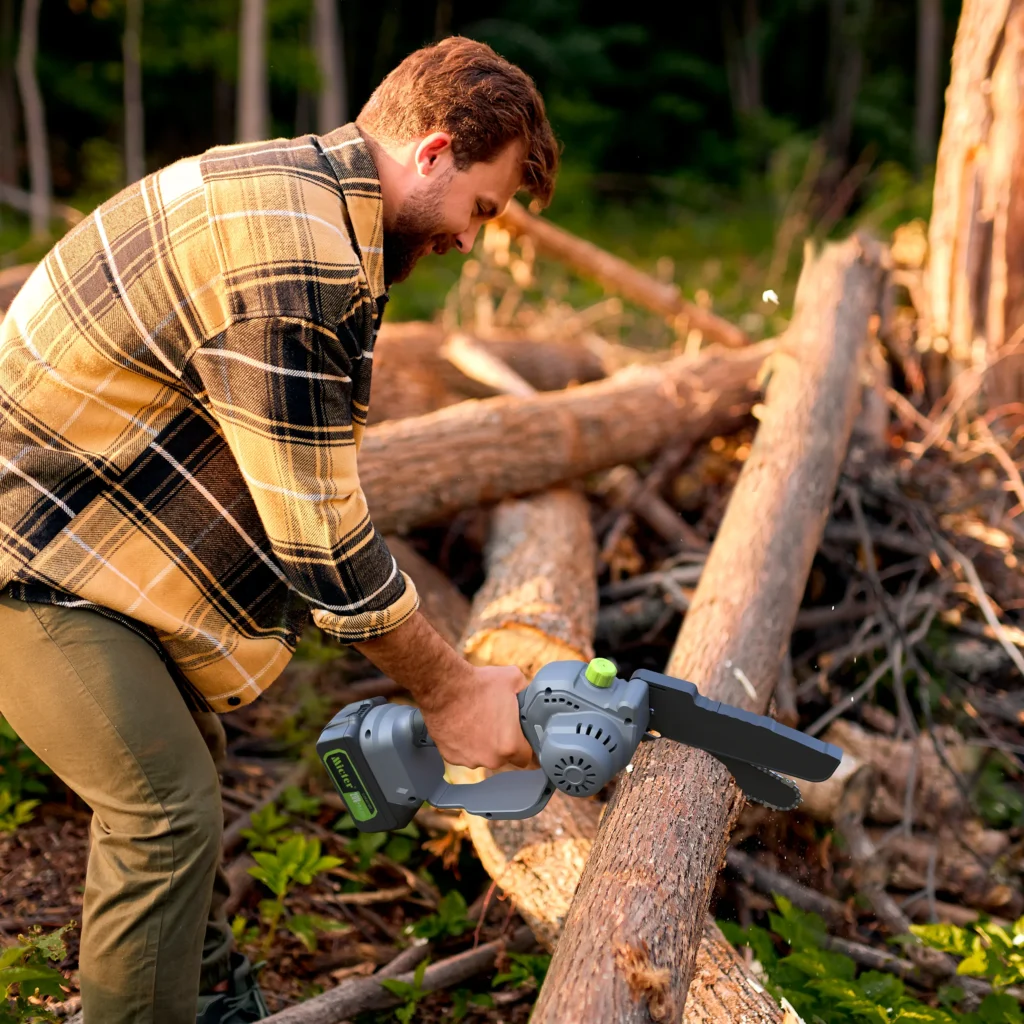
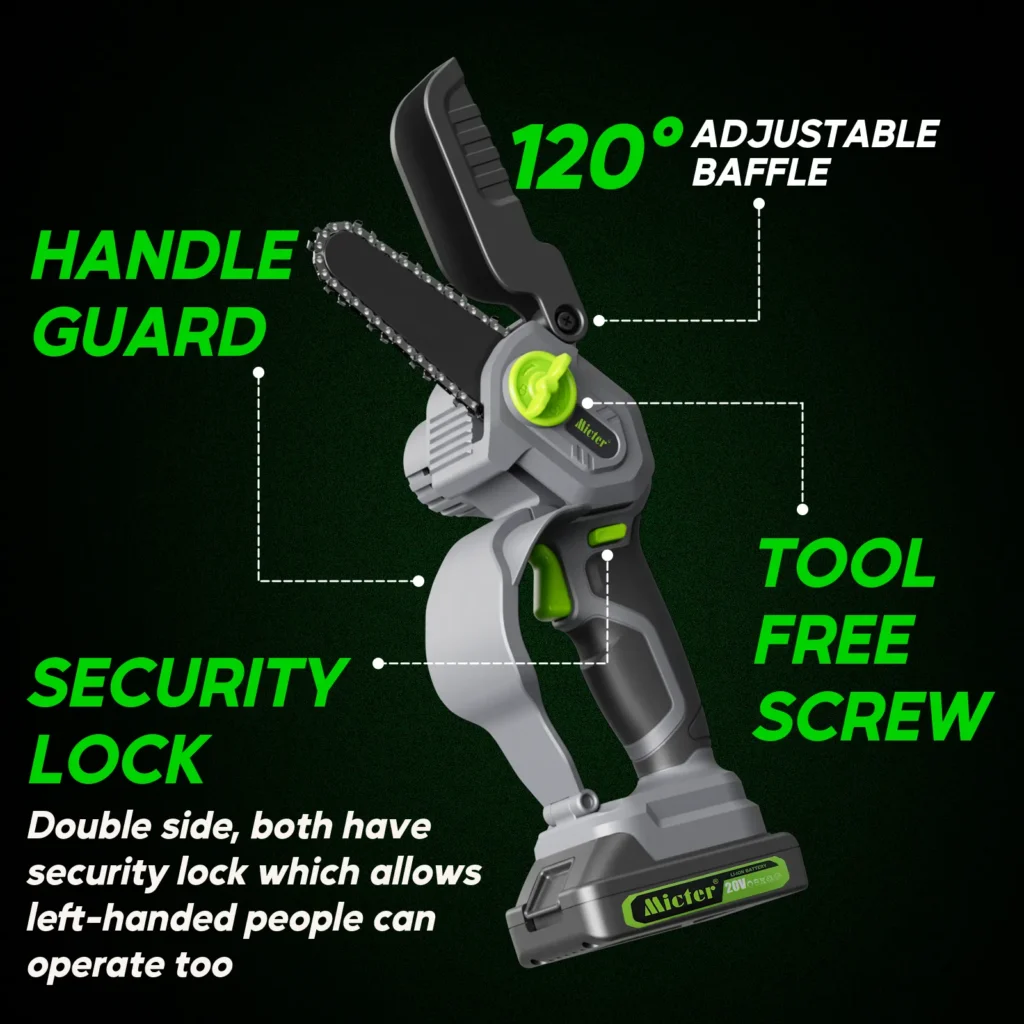
- The compact Micter 20V mini chainsaw is designed for precise pruning and limb cutting, with a form factor that’s far easier to use in tight garden spaces than a full-size saw. You can see how it performs in real use in this in-depth look at how well cordless chainsaws work with the Micter 20V mini chainsaw.
- For garden builds, small repairs, or assembling outdoor furniture, a dedicated cordless drill like the Micter 20V drill CD01 gives you enough power for wood, plastic, and metal, while staying compact and easy to control.
Best for:
- Garden-focused users who want quiet, clean, and precise cordless tools.
- Homeowners who care more about smart, targeted outdoor tools than a huge construction lineup.
Bottom line:
- Pros and heavy users usually lean toward Milwaukee, DeWalt, or Makita.
- Most homeowners and DIYers do great with Ryobi or Bosch.
- Garden-focused users benefit most from brands like Micter that specialize in smart, precise cordless gardening tools.
The “best” cordless tools are the ones that match how you actually work – your projects, your budget, and the battery platform you’re ready to commit to.
Best Cordless Tools Reviewed From Leading Brands
If you’re asking who makes the best cordless tools, I look at real‑world use: drilling, fastening, cutting, and garden work. Here’s how the top cordless drill brands and tool lines stack up when you actually put them to work.
Best Overall Cordless Drill And Driver: Milwaukee vs DeWalt
For a go‑to cordless drill/driver, Milwaukee and DeWalt are the benchmark for most global users.
- Milwaukee M18 drill/driver kits are my pick for pros who push tools hard. Their brushless motors, strong torque, and long‑lasting 5.0Ah+ batteries deliver serious power for concrete anchors, framing, and metal work.
- DeWalt 20V MAX drill/driver sets feel slightly lighter in hand, with excellent ergonomics and very smooth triggers, which many DIYers and contractors like for day‑long work.
- If you’re doing heavy renovation or jobsite work, I usually steer people to Milwaukee; for a mix of home improvement and trade work, DeWalt is an easy, reliable choice.
Either way, both are among the most reliable cordless power tools on the market, and you’ll find big ecosystems of compatible batteries and best value power tool kits.
Top Cordless Impact Drivers For Fastening And Decking
Cordless impact drivers are where you really feel brand differences.
- Milwaukee impact drivers are high‑torque cordless fasteners built for lag bolts, structural screws, and decking in tough materials. They hit hard and drive fast.
- DeWalt impact drivers balance power and control, with excellent speed settings for cabinet installs, fencing, and general carpentry.
- For most homeowners, a mid‑range DeWalt or Milwaukee kit gives more than enough power and keeps weight reasonable for overhead work.
If you want one “do‑everything” fastening tool, a brushless motor cordless impact driver is the better buy than a basic drill for long days of deck, shed, or pergola builds.
Reliable Cordless Circular Saws And Cutting Tools
Cordless circular saws have come a long way, and they’re ideal for cutting sheet goods and lumber in the driveway or garden.
- Milwaukee and DeWalt both offer 6‑1/2″ and 7‑1/4″ cordless saws with plenty of cutting depth for framing and decking.
- Makita steps in as a top cordless saw brand for users who care about low vibration, precise cuts, and quieter operation on site.
- For affordable DIY cordless saws, Ryobi’s ONE+ lineup is good enough for occasional plywood cuts, trim, and outdoor projects without overspending.
If you cut all day, go with the pro models. If you just break down boards on weekends, a mid‑range saw from DeWalt, Makita, or Ryobi is usually the best cordless tool for the money.
Micter Cordless Gardening Tools For Precision Work
For garden users, I focus on precision and comfort rather than brute power.
Micter (our own smart gardening brand) is designed for homeowners and hobby growers who want reliable battery‑powered tools for pruning, digging, and planting:
- Lightweight cordless pruners for clean cuts on roses, vines, and fruit trees.
- Compact tillers and soil tools for raised beds and small garden plots.
- Durable outdoor power tools with weather‑resistant housings suited to damp, variable climates.
Paired with a high‑capacity Micter 4000mAh lithium battery, you get long runtime for seasonal pruning and weekend projects without swapping packs all the time.
Cordless Battery Platforms And Battery Life Tips
Cordless tool ecosystem comparison is just as important as the tool itself.
- Milwaukee M18 and DeWalt 20V MAX: best for professional cordless tool sets and serious DIYers who want lots of tool choices on the same batteries.
- Ryobi ONE+: great for budget‑friendly cordless tools for home use, especially if you want many light‑duty tools on one affordable platform.
- Micter garden tools: optimized around compact lithium‑ion packs and a dedicated li‑ion battery charger that’s simple and fast for everyday users.
To extend battery life on any system:
- Avoid fully draining packs; recharge around 20–30%.
- Store lithium‑ion cordless technology in a cool, dry place, not in direct sun or a hot car.
- Use the brand’s original charger to protect cells and keep performance stable over time.
When you balance brand ecosystems, runtime, and local availability of batteries and chargers, it becomes much easier to decide who makes the best cordless tools for your own home, workshop, or garden.
Cordless vs Corded Tools: When Cordless Is Really the Best Choice
Pros and Cons: Cordless vs Corded for Home and Garden
Cordless tools – pros:
- Mobility: No outlet needed, no extension leads, perfect for yards, balconies, rooftops, and tight indoor spaces.
- Safety: No cord to trip over or cut accidentally, which is a big deal with saws and trimmers.
- Convenience: Grab-and-go. Great for quick jobs, repairs, and weekend DIY.
- Modern power: With lithium‑ion and brushless motors, top cordless tools now rival corded tools for drilling, driving, pruning, and most cutting tasks.
Cordless tools – cons:
- Battery limits: Runtime depends on battery size and condition. You may need 2–3 batteries for long days.
- Upfront cost: Batteries and chargers add to the price, especially when you start a new platform.
- Cold storage issues: Batteries don’t love extreme cold or heat and need basic care.
Corded tools – pros:
- Unlimited runtime: As long as you have power, you keep working.
- High, consistent power: Great for heavy cutting, grinding, and continuous drilling.
- Lower tool cost: Bare corded tools are often cheaper than equivalent cordless models.
Corded tools – cons:
- Limited reach: You’re stuck near an outlet or multiple extension cords.
- Safety risks: Trip hazards, cord damage, and messy workspaces.
- Less flexible outdoors: Not ideal for large gardens, remote areas, or work sites without stable power.
Where Cordless Tools Shine
Cordless tools really win when you care about mobility, safety, and outdoor work:
- Home improvement: Hanging shelves, assembling furniture, drilling anchors, light framing, decking, fence repair.
- Outdoor jobs: Garden structures, sheds, pergolas, and any project far from a power outlet.
- Gardening and landscaping: Cordless pruners, hedge trimmers, and mini chainsaws are game changers for small to medium gardens. If you’re unsure whether compact saws are enough for you, look at real‑world tests of mini cordless chainsaws in use like in this breakdown of whether mini chainsaws really work for pruning and yard work.
- Tight or awkward spaces: Attics, crawl spaces, roofs, ladders, and any spot where managing a cord is annoying or unsafe.
- DIY speed: Quick repair? Cordless wins every time—no setup, no cable management.
When Corded Tools Still Make Sense
Corded tools still earn their place in the workshop for heavy, stationary work:
- Workshops and garages: Table saws, mitre saws, big sanders, bench grinders—these sit in one place and draw lots of power.
- Continuous cutting or grinding: Tile cutting, metal grinding, and long ripping sessions are easier with steady corded power.
- Budget setups: If you rarely do DIY but sometimes need a powerful saw or grinder, a simple corded unit can be cheaper than joining a new cordless platform.
- High-demand pro use in one spot: If you’re on a fixed jobsite with plenty of outlets, corded can still be cost‑effective for some tools.
Cost and Long-Term Value: Switching to Cordless
The real value of cordless isn’t just the first drill you buy—it’s the whole battery ecosystem:
- Higher initial cost, better long-term payoff:
- First kit (tool + 2 batteries + charger) costs more.
- Every extra bare tool on the same platform is much cheaper.
- One battery platform = big savings:
- Use the same batteries across drills, impact drivers, saws, lights, and even gardening tools.
- Fewer chargers and fewer random batteries lying around.
- Lower “hidden” costs:
- No need for long, heavy-duty extension cords.
- Fewer cord-related accidents or repairs.
- Battery life and replacement:
- Good lithium‑ion packs can easily last 3–5 years with basic care.
- Store batteries cool and dry, avoid full drain, and rotate packs to extend life.
If you’re building a setup from scratch, pick a reliable cordless ecosystem with the tools you actually need—drill/driver, impact driver, saws, and for garden use, quality cordless pruners or mini chainsaws. If safety is a concern, especially around compact cutting tools, it’s worth checking real safety advice on how safe mini cordless chainsaws are in everyday use.
In short:
- For most DIYers, homeowners, and gardeners, cordless is the best everyday choice.
- Keep a few corded workhorses only for heavy, stationary, or specialist tasks.
Building the Best Cordless Tool Kit for Your Budget
When people ask who makes the best cordless tools, I always come back to this: the “best” brand is the one that fits your budget, the jobs you actually do, and the battery platform you’re willing to commit to. Let’s break it down by user level and how to buy smart.
Beginner Cordless Tool Kits & Starter Bundles
If you’re a new DIYer or homeowner, you don’t need the most expensive pro-grade gear. You need:
- One shared battery platform (e.g., Ryobi ONE+, DeWalt 20V, Milwaukee M18, Makita 18V)
- Core tools only:
- Drill/driver
- Impact driver (optional but very handy)
- Circular saw or multi-tool
- One or two batteries (4.0Ah is a good starting point)
- Pre-made starter kits: These usually give you:
- Better value than buying tools and batteries separately
- A charger and bag/box included
- Enough tools for basic home repairs, furniture builds, and light outdoor work
For beginners, I’d focus on:
- Ryobi for best value and huge home/DIY range
- DeWalt or Makita if you want a step up in build quality and may move into heavier work later
Mid-Range & Pro-Level Cordless Tool Setups
If you’re a serious DIYer or contractor, treat your cordless system like an investment:
Go all-in on one ecosystem. Mixing brands means extra chargers and incompatible batteries.
For mid-range and pro setups, I’d build around:
- Drilling & fastening
- Brushless hammer drill/driver
- High-torque impact driver or impact wrench
- Cutting
- 6–7¼” circular saw (ideally brushless)
- Reciprocating saw for demo and garden pruning
- Jigsaw or oscillating multi-tool for detail work
- Outdoor & specialty
- String trimmer, blower, hedge trimmer on the same battery platform
- Compact chainsaw or mini chainsaw for branches and firewood (and learn basic upkeep like how to sharpen a mini chainsaw chain)
For heavy users, Milwaukee, DeWalt, and Makita usually lead on performance, durability, and brushless tech. They also offer serious pro kits with multiple tools and high-capacity batteries that are cheaper as bundles.
Where to Buy & How to Spot Real Deals
You don’t need to pay full price if you’re patient and a bit strategic.
Best places to buy:
- Big-box stores (Home Depot, Lowe’s, B&Q, etc.)
- Official brand stores or brand websites
- Reputable online platforms (Amazon, regional marketplaces)
- Local tool dealers (often better advice and support)
How to spot real deals (and not junk):
- Compare kit contents, not just price
- Count tools AND batteries
- Check battery size: a kit with one 2.0Ah battery is not equal to one with two 5.0Ah packs
- Look for brushless motors in mid/pro price ranges
- Watch seasonal sales:
- Black Friday, Christmas/New Year, Father’s Day, local shopping festivals
- Refurbished tools:
- Fine for secondary tools (like an extra impact driver)
- Make sure they come with at least a short warranty
If you’re adding a cordless chainsaw, pay attention to support content too—brands that explain things like how tight a mini chainsaw chain should be usually care about long-term use, not just the sale.
Cordless Tool Maintenance, Storage & Battery Care
Good tools die early when they’re abused, not used. A few simple habits will protect your investment:
Tool maintenance:
- Keep tools clean and dry; wipe off dust and debris after use
- Check vents and cooling slots—don’t let sawdust block them
- Tighten loose screws, guards, and accessory mounts regularly
- For cutting tools, keep blades and chains sharp instead of forcing dull ones
Storage habits:
- Store in a dry, cool place, out of direct sun
- Use cases or bags to avoid knocks, moisture, and rusty bits
- Don’t leave tools or batteries in the back of a hot vehicle for days
Battery care (Lithium-ion):
- Don’t fully drain batteries constantly—charge when they feel weak, not dead
- For long-term storage, keep them around 40–60% charge
- Avoid extreme heat and freezing temps
- Use the correct charger for your brand—no off-brand hacks
- Label your batteries and rotate them so all packs get used, not just one favorite
If you match your cordless tool kit to where you are right now—beginner, serious DIY, or pro—and commit to one good battery platform, you’ll get far better value than chasing whatever “best cordless tool” is trending this week.
Cordless Tool FAQs: Quick Answers Before You Choose a Brand
Most reliable cordless tool brands for beginners and homeowners
If you’re starting out or mostly doing home projects, you don’t need the most expensive pro line, but you do need tools that won’t quit on you.
Solid picks for most homeowners:
| Brand | Best For | Why It’s Reliable |
|---|---|---|
| Milwaukee | Heavy DIY, light–pro work | High build quality, huge M18/M12 ecosystem |
| DeWalt | Home + jobsite-level toughness | Strong performance, great warranty network |
| Makita | Quiet, smooth tools, long runtime | Excellent motors, low vibration |
| Ryobi | Budget‑friendly home and garden work | Massive ONE+ range, good enough for most DIY |
| Micter | Smart, precise garden and yard tasks | Purpose-built garden tools, clean cuts |
For general home improvement, I recommend Ryobi, DeWalt, or Makita.
For garden and landscaping, brands like Micter shine because they’re built specifically for precise outdoor tasks, not just “rebranded” construction tools.
How to choose the right battery voltage for home and garden work
Battery voltage affects power, weight, and price. Here’s the quick way to decide:
| Voltage | Best Use Cases | Notes |
|---|---|---|
| 12V | Light DIY, furniture, small fixes | Compact, light, perfect for apartments |
| 18V/20V | Most home + garden tasks | “Sweet spot” for power vs weight |
| 36V+ | Heavy cutting, large yards, pro use | More power, heavier and pricier |
Simple rule of thumb:
- Mostly indoor DIY + light yard work → 12V + a few 18/20V tools
- Mix of home renovation + regular garden work → 18/20V as your main platform
- Big properties, frequent tree work, lots of cutting → consider a higher-voltage outdoor line
Do niche brands like Micter fit into a cordless tool ecosystem?
Yes—if you choose carefully. I build ecosystems around what I actually do most:
- If you do a lot of gardening and landscape detailing, a focused brand like Micter makes sense:
- Tools are tuned for precision pruning, digging, and planting
- Ergonomics and balance are designed for long outdoor sessions
- You can pair their garden tools with a mainstream construction brand for drills/saws
For example, you might run a main 18/20V platform for building projects, and use Micter pruning and cutting tools for your beds, shrubs, and trees. That way you get the best of both worlds without overbuying on either side.
If you’re already looking at specific garden tools, compare a Micter drill or similar cordless option against your main brand on:
- Battery capacity (Ah)
- Weight
- Grip comfort
- Real-world runtime outdoors
Where to find the best deals on cordless tool kits and bundles
You don’t have to pay full price if you time it right and know where to look.
How I usually get the best value:
- Buy kits, not single tools
- Combo kits with 2–4 tools + 2 batteries + charger are often cheaper than buying two bare tools.
- Watch sales cycles
- Major promos usually hit around spring (yard season), Black Friday, and year-end.
- Compare “bare tool” prices before committing to a platform
- If bare tools for a brand are expensive, the ecosystem will cost more long term.
- Check direct-from-brand deals
- For specialized gear, the brand site often has the best bundles. For example, you can compare pricing and specs directly on a Micter cordless drill before you decide how it fits into your setup.
- Value checklist before you buy:
- At least 2 batteries in the kit
- Fast charger included
- Clear warranty (3 years or better is ideal)
- Tools you’ll actually use (drill/driver, impact, saw, garden tool—not random fillers)
If you lock in one main battery platform and then add focused tools like Micter’s precision gardening lineup on top, you’ll get a flexible cordless ecosystem with strong value and minimal waste.